Yes, an EV charger can be installed outside, and in plenty of Newcastle homes, the driveway or carport is the better spot. The charger has to be rated for the weather, placed where the cable reaches the car, and protected from knocks. Close to the beach, salt air adds one more check.
Most home wall chargers sold in Australia are built for outdoor use, but not all of them, so check the installation manual before you buy. An outdoor charger needs a suitable weather rating, cabling protected in conduit and a mounting spot out of the worst of the sun and rain. Installed properly, it’s just as safe as one in the garage, and a site check through EV charger installation will tell you which spot suits your home.
Garage, Driveway or Carport: Which Is Better?
There’s no single right answer. It depends on where the car actually parks each night and where the switchboard is.
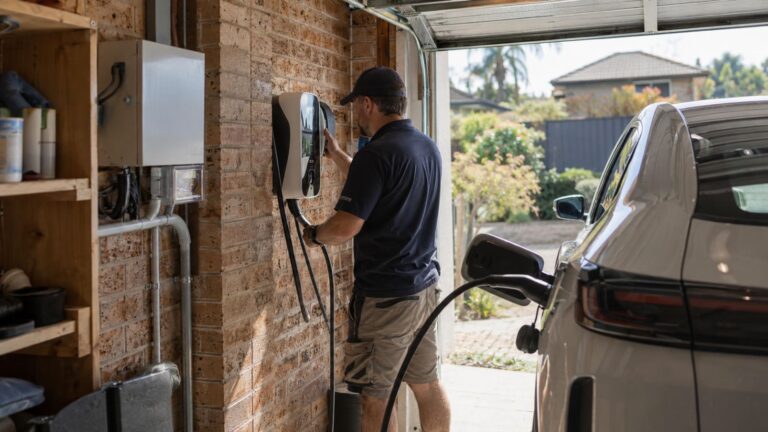
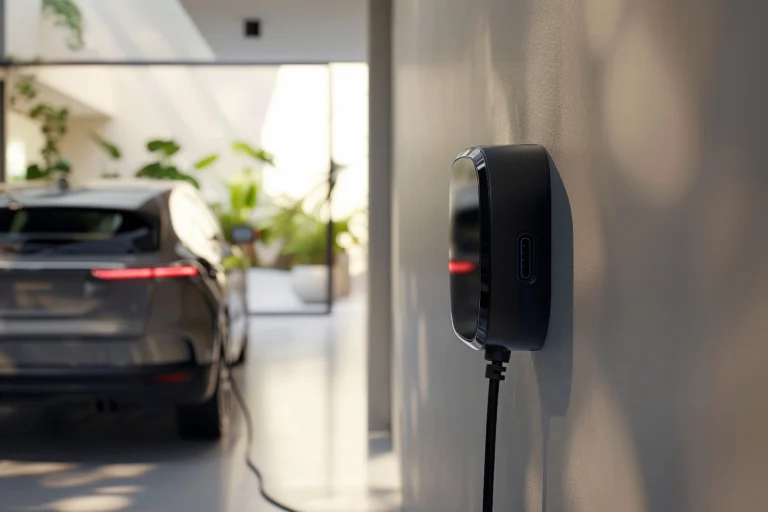
The garage is usually the tidiest and most protected option. The catch is that many Newcastle garages are used for storage, or are too narrow for comfortable charging. If the car sleeps in the driveway, put the charger where the car is, not where it’s easiest to hide.
I can check the site, the switchboard and where your car’s charge port sits, then recommend the spot.
Licensed electrician · Newcastle, Lake Macquarie and MaitlandWeather Ratings Explained Simply
Chargers carry an IP rating. The first number is protection against dust, the second against water. Installation guidance in Australia puts the minimum for outdoor chargers at IP44, but a fully exposed driveway spot deserves more.
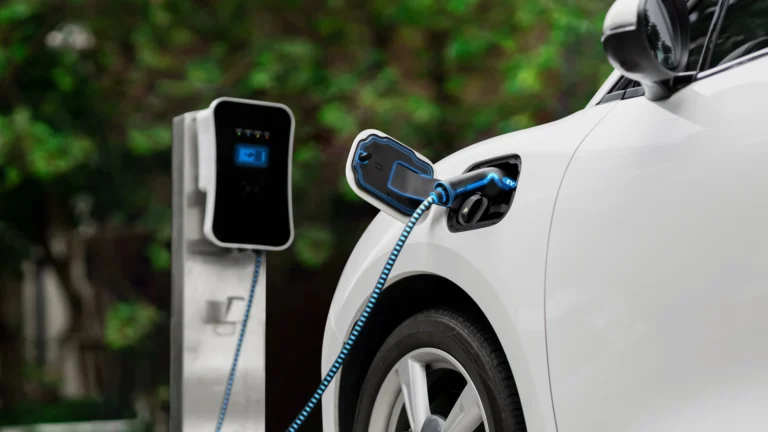
So, are EV chargers waterproof? Not in the swimming pool sense, but a charger with the right rating is sealed against rain, and the plug and car connection are designed to be used in wet weather. For a driveway or pedestal, also ask about the impact rating (an IK number), which tells you how well the casing handles a knock.
Coastal Homes: Salt Air and Where to Mount It
In suburbs such as Merewether, Bar Beach, Stockton, Swansea and Redhead, salt in the air settles on everything outdoors. Over time, it corrodes fixings, screw terminals and cheap housings. A few choices make a real difference:
- Mount it on the sheltered side of the house or deep under the carport, away from the prevailing sea breeze.
- Use stainless steel fixings and quality conduit fittings.
- Check the warranty conditions for coastal installs before buying the charger.
- Give it a wipe down with fresh water every few months and check the seals after big storms.
Cable Length and Where Your Car’s Charge Port Is
This is the detail people miss. Charge ports sit in different places on different cars: front, rear, left or right. A charger on the wrong wall can mean a cable stretched across the bonnet or a trip hazard across the path.
Tethered cables are commonly 5 to 7.5 metres. Before choosing a spot, park the car the way you normally do, note where the port is, and check the cable reaches without being pulled tight. If you might change cars, or two cars will share the charger, allow some slack. In a garage, the best location is usually on the wall closest to the charge port when the car is parked normally, clear of the door’s path.
Long Cable Runs From the Switchboard
The charger needs its own circuit from the switchboard. The further away it goes, the more cable, conduit and labour the job needs, and a trench across the yard adds more again. That’s why a charger on the garage wall behind the switchboard is usually cheaper than one at the far end of a carport. For typical figures, see this guide to EV charger installation cost in Newcastle.
Safety and Compliance for Outdoor Chargers
Whether it’s inside or out, a home EV charger in NSW needs:
- A dedicated circuit from the switchboard, sized for the charger.
- The right RCD protection. The NSW Government notes EV chargers need Type B RCDs because they can leak DC. Some chargers have built-in DC fault detection, in which case the manufacturer specifies the equivalent protection.
- Cabling in conduit and protected from damage along its route.
- Protection from vehicles on a driveway, such as a wheel stop or bollard where the charger could be bumped.
- Ausgrid approval for the extra load, which Ausgrid must give before connection. Your electrician lodges it.
- A licensed electrician and a compliance certificate for the work. Wiring in a charger yourself isn’t legal in NSW, as covered in whether you can install your own EV charger.
In a unit or townhouse complex, the owners corporation has to approve an outdoor charger on common property first. This guide to EV charging in a strata car park explains how.
Garage, carport and driveway chargers across Newcastle, Lake Macquarie and Maitland, including coastal homes. I’ll recommend the spot, check the switchboard and handle the Ausgrid paperwork.
Licensed electrician · Written quote before work starts · Compliance certificate on completionFrequently Asked Questions
Are EV chargers waterproof?
A charger rated for outdoor use is sealed against rain and dust to the level its IP rating states. For an exposed driveway, IP65 or higher is a sensible choice.
Can you charge an EV in the rain?
Yes. The charger, plug and car inlet are designed to be connected in wet weather. Avoid leaving the plug lying in a puddle and hang the cable up when you’re done.
Is it safe to charge an EV in a garage?
Yes, with a compliant install on a dedicated circuit with the right RCD protection. Keep the area around the charger clear of stored fuel, chemicals and clutter.
What’s the safest place for a home EV charger?
Somewhere protected from vehicle knocks, out of the worst weather, and close enough that the cable reaches the car without crossing a walkway. For many homes that’s the garage wall; for others, a sheltered carport.
Does the charger’s location change charging speed?
Not directly. A correctly sized circuit charges at the same speed inside or out. Some chargers slow down when they get very hot, which is one more reason to keep them out of all-day sun.
Do I need council approval for an outdoor EV charger?
A wall charger at a house doesn’t normally need council approval. In strata, the owners corporation must approve it first.
Put It Where the Car Actually Parks
An outdoor EV charger is a perfectly good option when it’s rated for the weather, mounted with the car’s charge port in mind and protected from knocks and salt air. If you’re weighing up the garage against the driveway at your Newcastle, Lake Macquarie or Maitland home, call 0450 406 450.