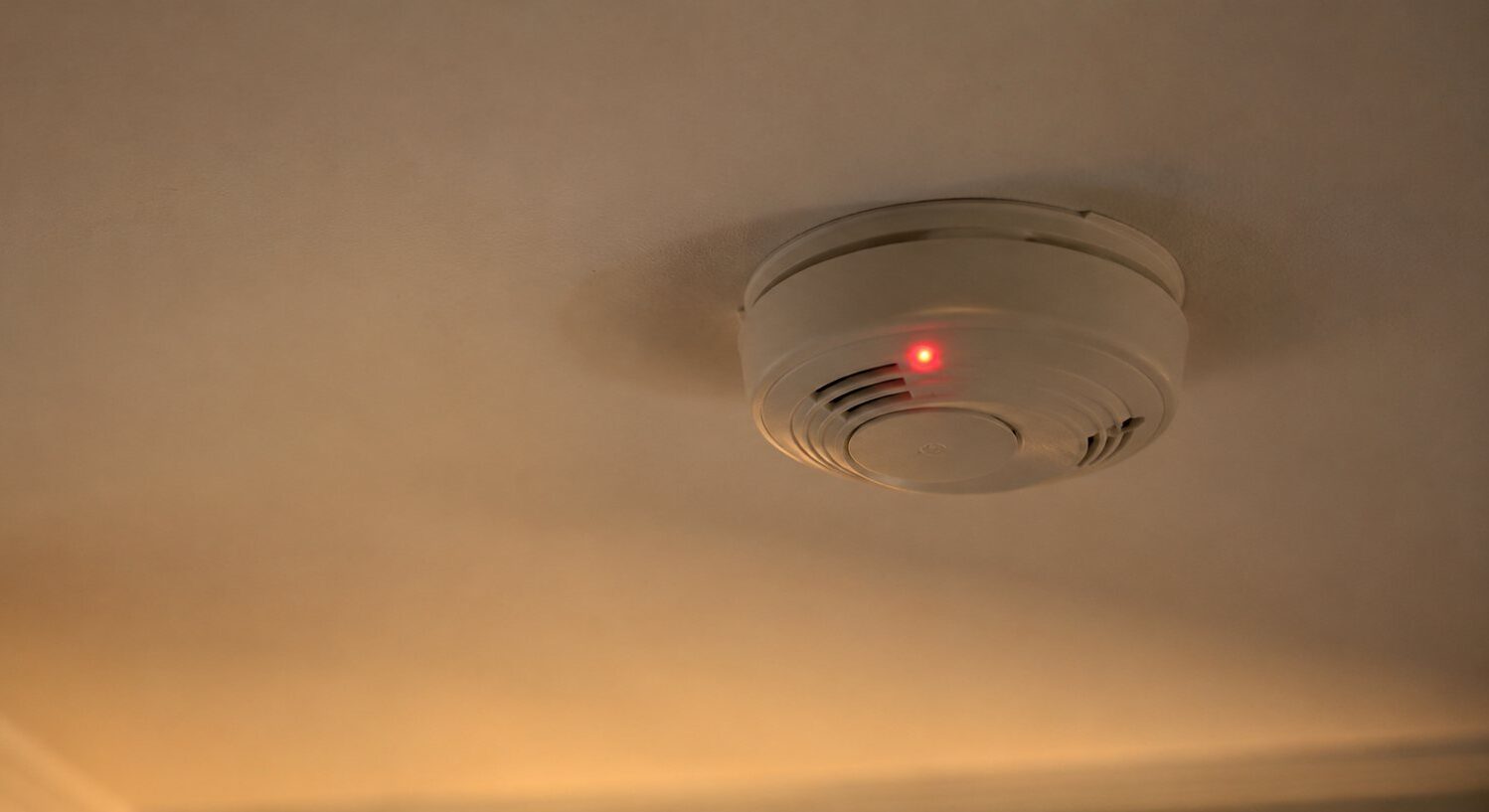
A smoke alarm that chirps every minute with no smoke in sight is almost always telling you one of four things. Most can be fixed in five minutes. One of them means the alarm has reached the end of its life. Here is how to tell which, starting with the quickest check.
A smoke alarm beeping for no reason usually has a low battery, including the backup battery inside a hardwired alarm. If a fresh battery doesn’t stop it, the alarm is likely past its 10-year life, has dust or insects in the sensor, or is one faulty unit setting off the rest. Battery alarms you can often sort out yourself. Hardwired alarms are connected to the home’s wiring, so repairing or swapping one calls for smoke alarm installation and replacement by a licensed electrician.
Chirp or Full Alarm? What Each Sound Means
A single short chirp is the alarm asking for attention. A loud, repeating alarm means it has detected something, or thinks it has.
Patterns vary between brands, so the label on the alarm or its manual is the final word for your model.
Why Your Smoke Alarm Is Beeping for No Reason: The Four Usual Causes
1A Low Battery, Including the Backup in Hardwired Alarms
Hardwired alarms catch people out. They run on 240-volt power from the house but keep a backup battery for blackouts, and when that backup runs low they chirp even though the power is on.
It is also why a smoke alarm beeps at night. A tired battery loses voltage as the house cools, so it can slip below the warning level around 2am and recover by breakfast. A chirp that stops in the morning still means the battery is on its way out. Fire and Rescue NSW recommends replacing removable batteries every year, so if your alarms went in together, change them all while the ladder is out.
2The Alarm Has Reached the End of Its Life
Sensors lose sensitivity with age, and Fire and Rescue NSW says every smoke alarm should be replaced at least every 10 years. Many newer alarms chirp when they reach that date, and if the battery is sealed in, no new battery will stop it.
Check the manufacture date on the label. Smoke alarms became compulsory in NSW homes in May 2006, so alarms fitted when the rules came in are now well past their 10-year mark. No date at all? Treat it as overdue.
3Dust, Insects or Steam in the Sensor
Most alarms installed today are photoelectric, also sold as optical. They sound when particles scatter a small light inside the chamber, and dust, cobwebs, tiny insects and thick steam do that just as well as smoke. A photoelectric smoke alarm going off for no reason often needs a clean, or sits too close to a bathroom. Older ionisation alarms react more to cooking, such as toast or a hot frying pan.
Humid Newcastle summers make both types more touchy, particularly in a hallway outside a bathroom door. Fire and Rescue NSW recommends vacuuming alarms every six months with a soft brush attachment. Never spray anything into them.
4One Faulty Alarm Is Setting Off the Rest
Interconnected alarms all sound when one senses smoke. That is a real safety upgrade, but it also means one dusty or failing unit can set off every alarm in the house. On many models, the alarm that triggered flashes differently or keeps a memory light on afterwards. That is the one to clean, test or replace. Linked alarms also need to be compatible models, so a mix of brands can cause trouble of its own.
Smoke Alarm Beeping Without a Battery? Why Hardwired Alarms Still Chirp
Taking the battery out and finding the alarm still chirps is common. Here is why:
- It still has mains power, and many models chirp to say the backup battery is missing.
- The battery is sealed inside. Ten-year lithium alarms have none to remove, and a chirp usually means the alarm is due for replacement.
- The power dipped. A blackout, a storm or a surge as Ausgrid restores supply can set off a brief alarm or chirp. Wait a few minutes, then press test on each one.
Don’t twist a hardwired alarm off its base or switch its circuit off at the switchboard to stop the noise. Both leave the house unprotected, and in NSW, repairing or replacing a hardwired alarm is licensed electrical work. If one keeps sounding late at night and the hush button won’t hold it, call an after-hours electrician.
Clipsal Smoke Alarm Beeping: Find the Date and Quiet the Chirp
Clipsal’s 755 series hardwired alarms are common in Australian homes. Clipsal’s own FAQ for its 755 series photoelectric alarm explains the signals:
- A red flash and one beep every 40 seconds is the low battery warning. Replace the 9-volt backup battery.
- Holding Test/Hush for 3 seconds snoozes a low-battery beep for 10 hours. It buys a night’s sleep; it doesn’t fix anything.
- The date code is in the bottom left corner of the yellow sticker inside, reached with the “Press to Open” button on the side. Older than 10 years means replace.
If it keeps chirping with a fresh battery, Clipsal’s FAQ lists a reset for that exact problem. If the chirp comes back after that, the alarm is usually due for replacement. Brands such as Quell, Brooks and Red use their own patterns, so check the label before assuming a signal means the same thing.
Beeping Noise in the House but It’s Not the Smoke Alarm
If you’ve stood under every alarm and the beeping noise in the house is still there, check these:
- A carbon monoxide alarm, more common in homes with gas heaters. Its signals differ from a smoke alarm’s, so read the label.
- A security alarm keypad, which often beeps after a power cut or when its backup battery is flat. More on security alarm systems.
- Battery backup units, such as a UPS for a computer or modem, or a solar battery or inverter.
- Appliances and forgotten devices: a fridge door left ajar, a dishwasher finishing, a spare smoke alarm in a cupboard.
To find it, turn off the TV, fans and aircon, stand still in each room and wait for two or three beeps. A chirp bounces off hard floors and can seem to come from the wrong room, so look for a flashing light too. If the sound is coming from low down, it isn’t a smoke alarm.
How to Stop a Smoke Alarm Beeping, Safely
Work through these in order. Most chirps stop by step four.
- Check for smoke or heat in every room first.
- Find the chirping alarm by its flashing light.
- Press test/hush to quiet it while you work.
- Replace the battery, or the backup battery in a hardwired alarm with a battery drawer. Use the type printed on the alarm, remove any pull tab, and have someone hold a stable ladder.
- Vacuum the vents gently.
- Check the date. Over 10 years, or none, means replace.
- Press test and make sure it sounds, along with any linked alarms.
What Not to Do
- Don’t leave the battery out. A quiet alarm won’t wake anyone in a fire.
- Don’t cover, tape or paint over an alarm, or spray anything into it.
- Don’t swap a hardwired alarm for a battery one from the hardware store. A standalone unit won’t talk to the others, so a fire in that room won’t set off the rest of the house.
When to Replace a Smoke Alarm Instead of Fixing It
Replace the alarm when it is more than 10 years old or the date can’t be read, when it still chirps after a new battery and a reset, when false alarms continue after a clean, or when a sealed 10-year alarm gives its end-of-life chirp.
If one alarm in a linked set has reached its date, the others usually have too, because they tend to go in on the same day. Whether you need to replace one alarm or the whole set depends on their age and how they’re linked. When a hardwired alarm in an older home keeps chirping after a new battery, in my experience it’s nearly always due for replacement rather than repair.
I can replace it and test the whole set.
Licensed electrician · Newcastle, Lake Macquarie and Maitland · 24/7 for urgent faultsRenting in NSW? Who Fixes a Beeping Smoke Alarm
Under the NSW Government’s rules for smoke alarms in a rental property:
- Landlords must check alarms every year, replace removable batteries yearly, replace alarms within 10 years of manufacture, and fix a faulty alarm within two business days of finding out.
- Hardwired alarms must be repaired or replaced by a licensed electrician.
- Tenants should report a faulty alarm straight away, even if it only needs a battery. Most can choose to replace a removable battery themselves after telling the landlord.
- In strata buildings, the owners corporation may be responsible instead. The tenancy agreement says who.
Smoke alarm replacement across Newcastle and Lake Macquarie, from one battery alarm to a full interconnected set, for homeowners, landlords and agents. Every alarm is tested before I leave.
24/7 for urgent faults · Licensed electrician · Newcastle, Lake Macquarie and MaitlandFrequently Asked Questions
Why does my smoke alarm only beep at night?
A weak battery loses voltage as the house cools overnight, so it dips below the alarm’s warning level in the early hours. The chirp may stop once the house warms up, but the battery still needs replacing.
Why is my smoke alarm still beeping after I changed the battery?
Check the battery is the right type, sits firmly and has no pull tab left on. Some alarms need a reset after a battery change. If it still chirps, the alarm is probably past its 10-year life or faulty and needs replacing.
Why are all my smoke alarms going off when there’s no smoke?
They are probably interconnected, so one alarm reacting to dust, steam or an insect sets off the rest. Find the one with the different light pattern, clean it and test it. If it keeps happening, replace that alarm.
How do I reset a hardwired smoke alarm?
Most have a test/hush button that clears a false alarm or alarm memory when held for a few seconds; the label or manual gives the exact steps. Any reset that means taking the alarm off its base or turning power off at the switchboard is a job for a licensed electrician.
How often should smoke alarms be replaced in NSW?
At least every 10 years, according to Fire and Rescue NSW. In rental homes, landlords must replace alarms within 10 years of manufacture.
Do I need an electrician to replace a hardwired smoke alarm?
Yes. A hardwired alarm is connected to the home’s fixed wiring, so in NSW it must be repaired or replaced by a licensed electrician. Battery-only alarms can be swapped by the homeowner.
Quiet Nights and Working Alarms
Most beeping smoke alarms are asking for something simple: a battery, a clean or an overdue replacement. Fix what you safely can and leave hardwired alarms to a licensed electrician. If an alarm in your Newcastle, Lake Macquarie or Maitland home won’t stop beeping, call 0450 406 450.