Three power points in the kitchen are dead; the lights still work, and nothing has tripped at the switchboard. That combination is common, and it usually points to one loose connection, not a failed circuit. Here is what is going on and why it needs a licensed fix.
When some power points stop working, but nothing has tripped, the usual cause is a loose or burnt connection at one power point. Power points on a circuit are wired one after another, so one bad joint cuts power to every outlet after it, and the breaker never sees a fault to trip on. Finding that joint means opening power points, which is licensed work, so it’s a job for electrical fault finding rather than a screwdriver.
“Switch that circuit off and call if you notice any of these”
- A power point faceplate that feels warm or hot, or a warm patch on the wall around it.
- Brown or black scorch marks, or melted plastic around the pin holes.
- A burning or hot plastic smell, or crackling and buzzing from the outlet.
- Turn off that circuit at the switchboard and call 0450 406 450, 24/7. Don’t plug anything back in.
Why Some Outlets Die While the Breaker Stays On
Power Points Are Wired in a Chain
The power points on a circuit aren’t each wired back to the switchboard. The cable runs to the first outlet, then on to the next, and the next, like links in a chain. Every connection along the way carries the power for everything after it.
When one of those connections comes loose, corrodes, or burns, the power stops there. Every outlet after it goes dead, and every outlet before it keeps working. Nothing has overloaded or shorted, so the circuit breaker has nothing to react to. That’s exactly what a Cardiff homeowner described: “3 kitchen power points dead, breakers all on.”
One Failed Outlet Can Take Its Neighbours With It
The weak link is often an outlet that has worked hard for years, such as the one behind the kettle, the microwave or a heater. Heat from a loose terminal slowly cooks the connection until it opens. Sometimes the dead outlet is the faulty one; just as often, the fault is in the last outlet that still works, because the cable onward to the dead ones connects there.
It also explains why the lights still work. Lights and power points are on separate circuits, so a fault on one rarely touches the other.
Quick Checks Before You Call (Safe Ones Only)
These take a few minutes and don’t involve opening anything.
- Check that the switch on the power point itself is on. It sounds obvious, but it catches people out.
- Plug in a lamp or phone charger you know works. A faulty appliance can make a good outlet look dead.
- Look at the switchboard for any circuit breaker or safety switch in the off position, including ones labelled for another area. Some homes have power points split across more than one circuit. If one has tripped and won’t stay on, see this guide to a safety switch that keeps tripping.
- Look for a power point with its own Test and Reset buttons, often in a bathroom, laundry, garage or outdoors. These have a built-in safety switch that can cut power to outlets further along the chain. Press Reset once. If it won’t reset, leave it.
- Look, without touching, at each dead outlet and the last working one for scorch marks or melted plastic. Hold the back of your hand near the faceplate to check for warmth. If you find either, stop and switch that circuit off.
“What Not to Do”
- Don’t unscrew the faceplate or try to tighten anything behind it. That’s licensed work, and a loose terminal can be live.
- Don’t run extension leads from a working outlet to the dead ones as a long-term fix.
- Don’t keep plugging a heater or kettle into the outlets that still work on that chain. If a joint is overheating, more load makes it worse.
- Don’t use a power point that has scorch marks, even if it still works.
Signs It’s More Serious (Burning Smell, Buzzing, Warm Wall)
A loose connection that hasn’t fully let go can still pass some power, and that’s when it gets hot. A burning smell with no obvious source, a faint crackle or buzz from an outlet, lights that dim when you plug something in, or a warm patch on the wall around a power point all mean a connection is arcing or overheating behind the plate. That’s a fire risk, not a nuisance.
Turn off that circuit at the switchboard and leave it off. If it’s late at night and you’ve lost power to something you can’t do without, an emergency electrician can make it safe and restore the rest of the circuit.
Warm or scorched power point? Licensed electrician · Newcastle and Lake Macquarie · 24/7 for urgent faults. Switch that circuit off at the switchboard and leave it off. I’ll find the burnt connection and make it safe.
Why You Can’t Just Swap the Power Point Yourself in NSW
Replacement power points are sold at every hardware store, which makes it look like a DIY job. It isn’t. The NSW Government is clear that DIY electrical work is dangerous and illegal, and that you should never install, replace, or move power points yourself. Doing unlicensed electrical work can bring fines of $22,000 for an individual.
There’s a practical reason too. Swapping the dead outlet often won’t fix it, because the faulty joint is frequently in a different outlet along the chain. Finding it means testing the circuit, not guessing.
What the Repair Involves and How Long It Takes
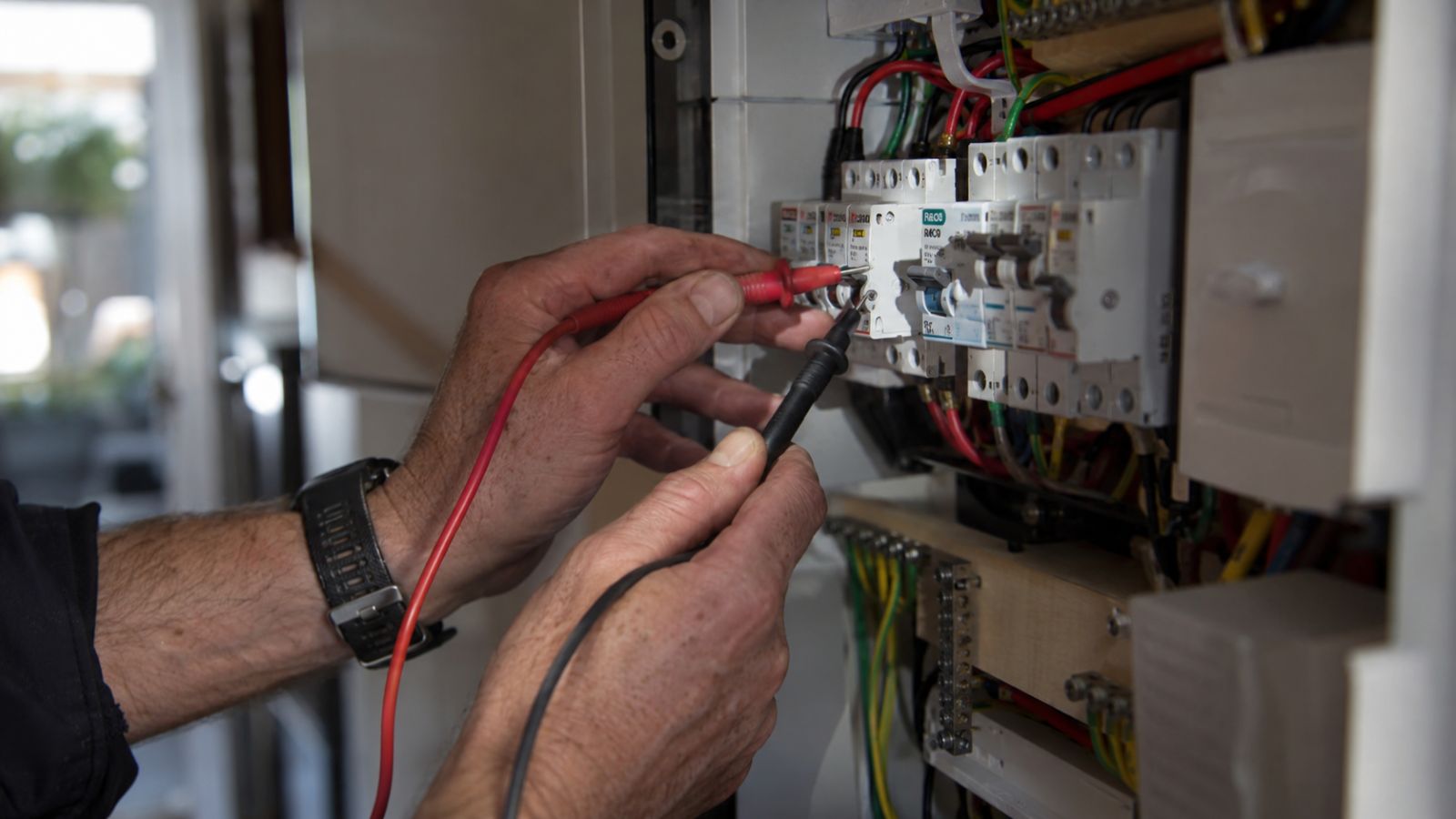
With the circuit isolated, I start at the last power point that works and the first one that doesn’t, open them up and check each terminal. The culprit is usually obvious once the plate is off: a loose screw terminal, a burnt or discoloured connection, or a cracked outlet. The connection is remade, or the power point replaced if it’s damaged, and the rest of the outlets on that circuit are checked so the next weak joint doesn’t fail a month later.
The circuit is then tested before the power goes back on. Most of these repairs are finished in a single visit.
Should You Upgrade Old Outlets While the Electrician Is There?
If one old power point has failed, the others on that run are the same age. While the circuit is open, it’s often worth replacing cracked or loose-fitting outlets, swapping a single for a double where you’re using adaptors, adding USB outlets beside the bed or desk, and fitting weatherproof outlets outside. Ask for it to be quoted separately so you can decide. For anything beyond a repair, see new or upgraded power points.
“Power point repairs and new outlets across Newcastle and Lake Macquarie” 24/7 for urgent faults · Licensed electrician · Newcastle, Lake Macquarie and Maitland. Dead outlets, burnt connections, loose power points and upgrades to doubles, USB and outdoor outlets. Every repair is tested before the power goes back on.
Frequently Asked Questions
Why are some power points not working but the lights are?
Lights and power points are on separate circuits. If only some power points are dead and nothing has tripped, a connection has usually failed at one outlet, cutting power to the outlets wired after it.
Why would half my power points stop working at once?
Either a breaker or safety switch for that power circuit is off, or a connection has failed partway along the chain of outlets. Check the switchboard first; if everything is on, the fault is at a power point.
Can rain stop power points working?
Yes. Moisture in an outdoor or wet-area power point can trip a safety switch, or trip a power point’s own built-in safety switch. Leave it off until it’s dry and have the fitting checked or replaced with a properly sealed one.
Is a dead power point dangerous?
A dead outlet on its own isn’t dangerous, but the loose connection behind it can be if it’s still partly carrying power and heating up. Warmth, scorch marks, buzzing, or a burning smell mean switch the circuit off and call an electrician.
Can I replace a power point myself in NSW?
No. Installing, replacing or moving power points is licensed electrical work in NSW, and unlicensed work can bring fines of $22,000 for an individual.
One Loose Connection, Found and Fixed
When some power points die and nothing trips, the fault is usually small but needs to be found properly. Do the safe checks, switch the circuit off if anything feels warm or smells hot, and leave the rest to a licensed electrician. For dead power points in your Newcastle or Lake Macquarie home, call 0450 406 450.