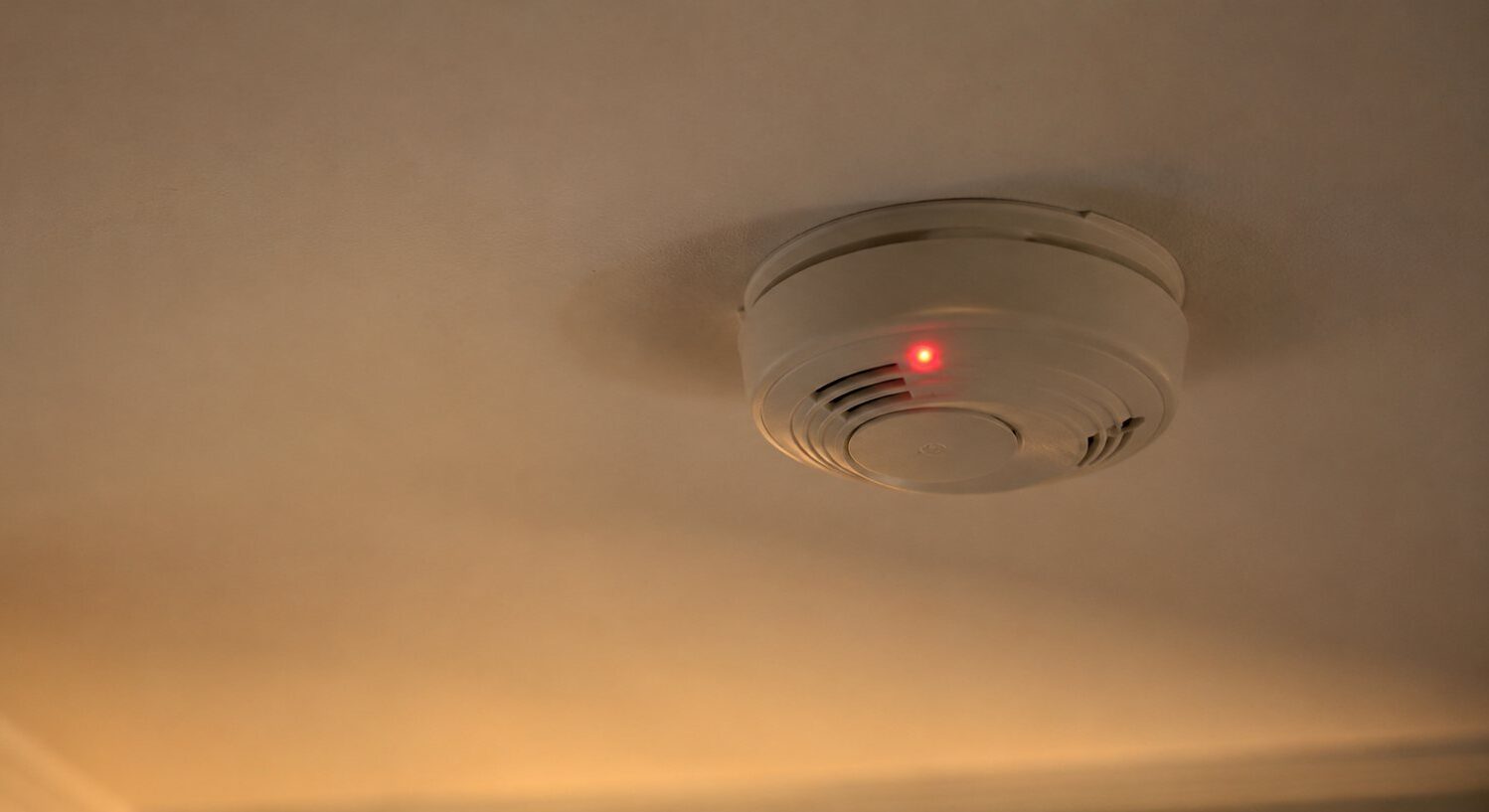
One hardwired smoke alarm has died. Do you replace just that one, or all of them? In most homes, the answer depends on how old the others are and whether they’re interconnected. Here’s how to decide, and what NSW rules say for homeowners and landlords.
Not always, but usually it’s the sensible move. The NSW rules don’t say every alarm must go when one fails. What decides it is the date on the others: Fire and Rescue NSW says every smoke alarm should be replaced at least every 10 years, and alarms put in together reach that point together. If yours are interconnected, the new one also has to be compatible with the rest, which often means the same brand and range. If the others are recent and a matching model is available, replacing one is fine. If they’re near 10 years old or the model is discontinued, replace the set. Hardwired alarms are a job for a licensed electrician, so book a smoke alarm replacement rather than doing it yourself.
When One Alarm Goes, Check the Date on the Rest
Each alarm has a manufacture or expiry date printed on its label or the back of the unit. On many hardwired models, you can see it by opening a cover on the alarm, without taking it off its base. Write down the date on every alarm in the house before you decide anything.
A Carrington owner rang in May 2025 with exactly this problem: one of three alarms had failed, and they wanted all three replaced to be on the safe side. It’s a common instinct, and often the right one. Alarms fitted at the same time wear out at about the same rate, so when one fails the others usually aren’t far behind, and doing them together means one visit instead of three.
Why Interconnected Alarms Are Usually Replaced as a Set
Interconnected alarms are wired or radio-linked so that when one detects smoke, they all sound. That only works if they can talk to each other. Manufacturers limit which models link together. Clipsal’s manual for one of its common photoelectric alarms, for example, says only Clipsal alarms are compatible for interconnection with it.
So a single replacement has to match the existing set. When the old range is no longer made, a new alarm may not link to the others at all, leaving one room that won’t trigger the rest. Replacing the whole set at once avoids that, puts every alarm on the same 10-year clock, and means one test of the full system on the day.
If an alarm is only chirping rather than dead, the cause may be simpler. Why your smoke alarm is beeping covers that first.
NSW Smoke Alarm Rules for Every Home
Since 1 May 2006, every NSW home has had to have at least one working smoke alarm on each level, including levels without bedrooms. Alarms must comply with Australian Standard AS 3786. Fire and Rescue NSW also says all smoke alarms should be replaced at least every 10 years, and recommends interconnected alarms in every bedroom, living space, hallway and stairway, and even the garage.
The minimum rule doesn’t say an existing home must have hardwired alarms. But once an alarm is connected to the home’s wiring, replacing it is electrical work, and in NSW electrical installation work must be done by a licensed electrician.
NSW Rules for Rentals: Landlord Duties and Timeframes
Landlords have extra duties under the Residential Tenancies Regulation, set out on the NSW Government’s smoke alarms in a rental property page. In short, a landlord must:
- Check that alarms work every year.
- Replace removable batteries every year, or as the manufacturer says for lithium batteries.
- Replace alarms within 10 years of manufacture, or earlier if the manufacturer says so.
- Repair or replace a faulty alarm within two business days of finding out.
- Use a licensed electrician for any repair or replacement of a hardwired alarm.
Landlords can’t hand these duties to the tenant in the lease. If a hardwired alarm isn’t fixed within two business days, the tenant can have a licensed electrician do it and claim the cost back, as long as they told the landlord first. Different arrangements can apply in strata buildings where the owners corporation looks after the alarms, so check the lease.
For landlords, the 10-year rule is the one that catches people out. A rental whose alarms were all fitted at the same time will have the whole set due at once.
“Landlords and agents: book replacements”Rental smoke alarms · Booked around the tenant · Newcastle and Lake Macquarie. I’ll replace the set, test every alarm together and give you a written record of the visit for the owner’s file.
Photoelectric or Ionisation: What to Fit Now
Many older sets are ionisation alarms. Photoelectric alarms are now the usual choice for hardwired sets. They react well to slow, smouldering fires and are less prone to going off from cooking. Fire and Rescue NSW lists both types without ranking them, while South Australia’s fire service, the MFS, recommends 240-volt photoelectric alarms, interconnected, as the best protection.
If you’re replacing a set anyway, that’s the time to switch the whole house to one photoelectric, interconnected range.
“What Not to Do”
- Don’t pull a hardwired alarm off its base or disconnect it yourself.
- Don’t take the battery out to stop a chirp and leave it out.
- Don’t buy a different brand online and expect it to link with your existing alarms.
- Don’t replace only the dead alarm if the others are the same age and nearly 10 years old.
What Replacement Involves and How Long It Takes
Each old alarm comes down, and a new one goes up on a new base, with the existing cable reused where it’s in good condition. The new alarms are linked, then tested one by one and as a set, so pressing the test button on any alarm sets off all of them. You’re shown where the date is, so you know when the next replacement is due.
A typical three-alarm swap on existing wiring takes about an hour to an hour and a half. Adding alarms where there’s no cable, or in a two-storey home, takes longer, and wireless-linked alarms can help where cable can’t easily reach.
“Whole-home smoke alarm replacement with testing” Smoke alarm replacement · Newcastle and Lake Macquarie. Hardwired and interconnected sets replaced in one visit, matched so every alarm sounds together, and tested before I leave. For homeowners, landlords and agents.
Frequently Asked Questions
Do I have to replace all my smoke alarms if one fails?
Not according to the NSW Government and Fire and Rescue NSW guidance. But if the others are the same age, close to 10 years old, or a compatible match isn’t available, replacing the whole set is usually the better choice.
How often should smoke alarms be replaced in NSW?
Fire and Rescue NSW says at least every 10 years. In rentals, landlords must replace alarms within 10 years of manufacture, or sooner if the manufacturer says so.
Can I mix brands of interconnected smoke alarms?
Usually not. Manufacturers limit interconnection to compatible models, often only their own. A mixed set may not sound together.
Who can replace a hardwired smoke alarm in NSW?
A licensed electrician. Connecting an alarm to the home’s wiring is electrical installation work, and NSW rental rules also require a licensed electrician for hardwired alarms.
How long does a landlord have to fix a smoke alarm in NSW?
Two business days from finding out about the fault. If a hardwired alarm isn’t fixed in that time, the tenant can arrange a licensed electrician and claim the cost back.
Check Every Date, Then Decide
One dead alarm is a good reason to check the rest. If they’re the same age, or close to 10 years, replace them together and test them as a set. To book smoke alarm replacement in Newcastle or Lake Macquarie, call 0450 406 450.